You Filed Your NYC Carbon Report. Here's Why That Might Not Be Enough.
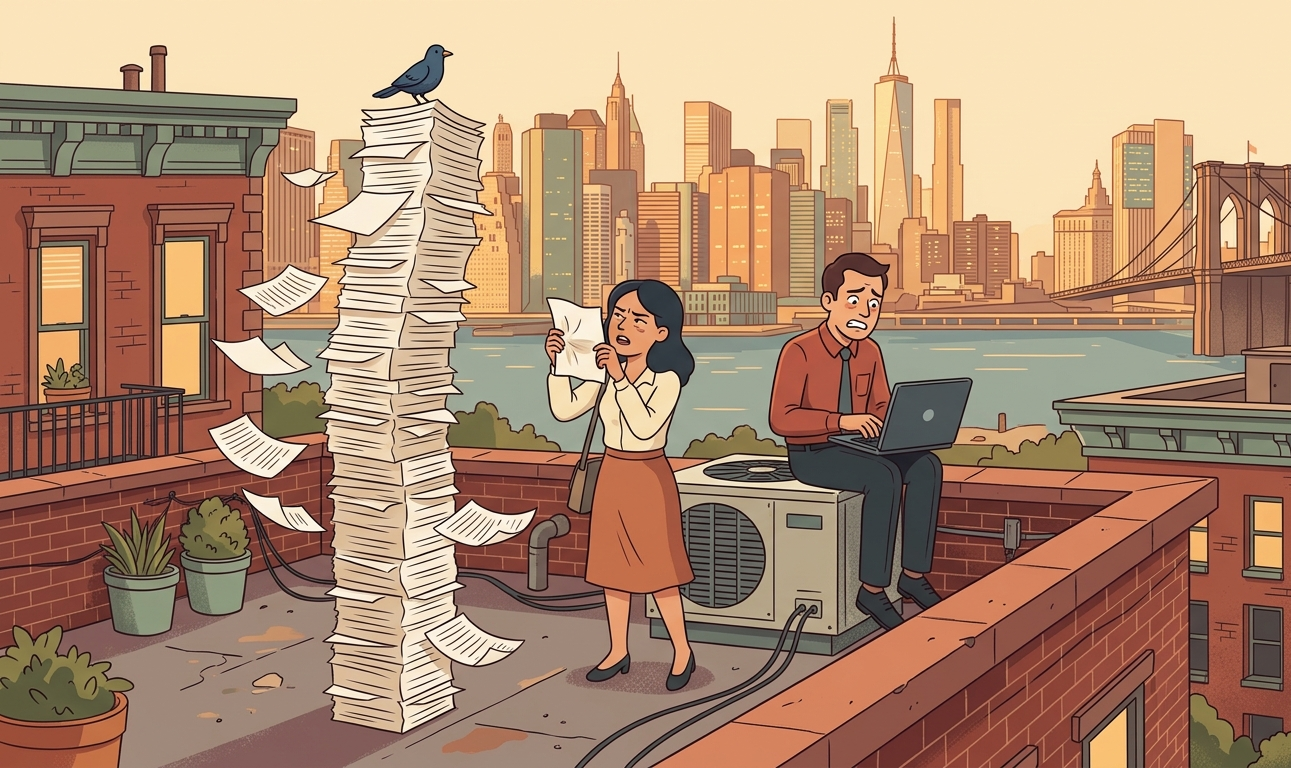
The May 1 deadline came and went. About 93% of covered buildings in New York City submitted their Local Law 97 carbon emissions reports to the Department of Buildings. If your building was one of them, congratulations. You filed on time.
But filing on time and filing correctly are two different things.
Consultants are already finding mistakes
Jimmy Carchietta, founder and CEO of The Cotocon Group, one of NYC's largest LL97 compliance firms, put it bluntly in a May 2026 press release: "We are in buildings right now reviewing what was submitted and finding issues that owners did not know existed."
The problems they're finding include:
- Inaccurate energy data pulled from utility accounts that don't match actual building consumption
- Mismatched benchmarking figures between LL84 (energy reporting) and LL97 (emissions reporting) filings
- Incorrect emissions factors applied to fuel types (especially buildings using a mix of gas, oil, and steam)
- Compliance pathways that don't align with the building's actual emissions profile
These aren't minor clerical issues. A wrong emissions factor can swing a penalty estimate by tens of thousands of dollars. A building that thinks it's compliant could actually be over its cap. A building paying penalties might actually qualify for an adjustment.
The DOB is auditing
The NYC Department of Buildings isn't just collecting reports and filing them away. According to their own press release, staff from the DOB Sustainability Bureau are auditing the filings received from approximately 28,000 buildings.
For the roughly 1,400 buildings that didn't file at all, the consequences are more immediate. DOB attorneys are preparing case filings at the Office of Administrative Trials and Hearings (OATH). Late filers face a separate penalty of $0.50 per square foot per month. For a 100,000 sqft building, that's $50,000 per month on top of any emissions penalties.
And here's the part that gets boards' attention: unpaid LL97 penalties can be placed as a lien on the property at 9% annual interest. That lien has to be cleared before the building can be sold or refinanced.
Co-ops are pushing back
Not everyone is accepting the penalties quietly. In April, co-op shareholders at Hilltop Village in Queens rallied with elected officials against what they called "unfunded mandates." Council members from both parties attended, and new legislation has been introduced to reduce LL97 penalties for co-ops and condos where the median unit assessed value falls below a certain threshold.
Whether that legislation passes is an open question. It needs both state and city action. In the meantime, the penalties are real and the clock is running.
Two tax programs expire in 48 days
If your building is planning energy upgrades to get into compliance, timing matters more than usual right now. Two programs that significantly reduce the cost of LL97 retrofits are expiring on June 30, 2026:
- 179D federal tax deduction: Up to $5.94 per square foot for qualifying energy efficiency improvements. Construction must begin by June 30. Even a 5% spend counts under the IRS safe harbor rule.
- J-51 property tax abatement: NYC gives back 70% of qualifying renovation costs over 12 to 20 years. Work must be completed by June 29. No extension has been passed.
For a 100,000 sqft multifamily building doing a heat pump conversion, the combined value of these two programs alone can exceed $600,000. After June 30, that money is gone.
What to do this week
- Check your numbers. Look up your building on CompliantLens and compare the penalty estimate against what was in your filing. If the numbers don't match, something in the report may be off. Look up your building (free)
- Review your emissions factors. Buildings that use district steam, fuel oil blends, or a mix of electric and gas heating are the most likely to have errors. The carbon coefficients changed for the 2030 period and some reports are using the wrong set.
- Check your incentive eligibility. Even if your building is over its cap, there are programs that can reduce both the penalty and the cost of fixing it. CompliantLens checks six programs automatically. See which programs apply to your building
- Talk to your board about 179D and J-51 before June 30. If your building is considering any energy work in the next few years, starting before the deadline captures tax savings that won't be available after.
Filing was step one. Getting the numbers right is step two.
The DOB is auditing. Consultants are finding errors. Penalties are accumulating. And two of the best financial tools for addressing all of this expire in less than seven weeks.
We built CompliantLens to give building owners a fast, independent check on their penalty exposure and available savings. No consultant needed for the first look. Enter your address and see where you stand.
Sources: NYC Department of Buildings LL97 compliance press release (2026); The Cotocon Group post-filing season press release (PR Newswire, May 2026); QNS reporting on Hilltop Village co-op rally (April 2026); NYC HPD J-51 Reform program rules; 26 U.S.C. Section 179D. This article is for informational purposes only and does not constitute legal, tax, or financial advice.